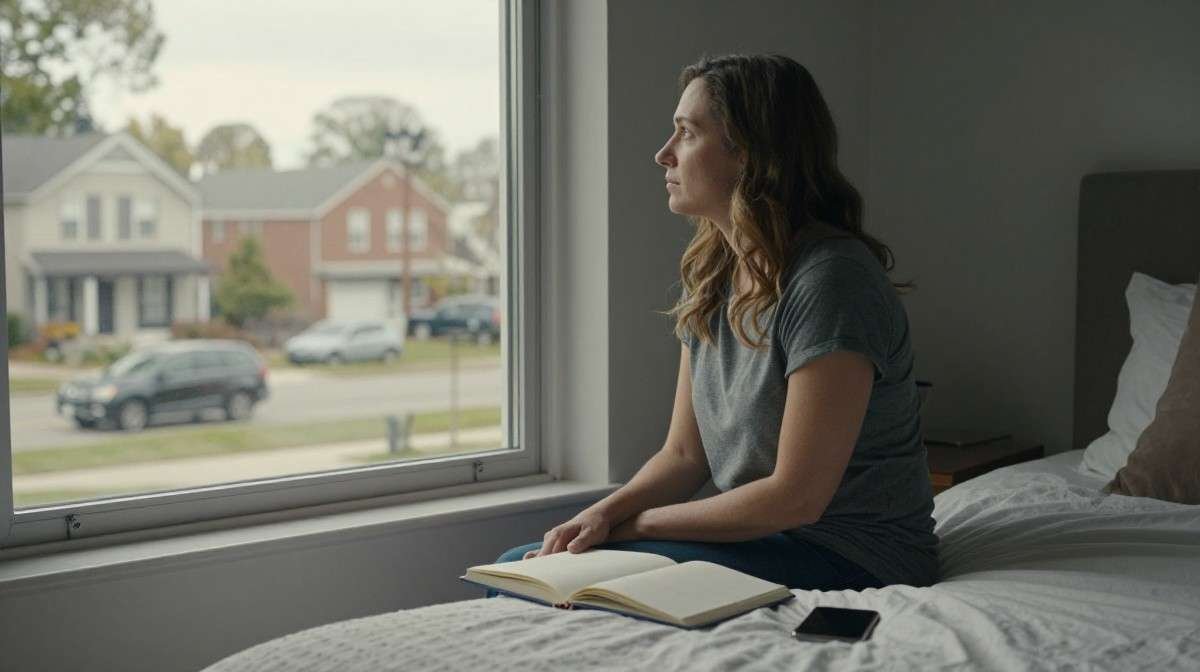
Nothing may be obviously wrong.
You go to work, answer texts, pay bills, make weekend plans, and keep up with everyday responsibilities. From the outside, life may look perfectly fine.
Yet something feels strangely still.
Maybe every week seems like a repeat of the last. Maybe you’re no longer excited about goals that once motivated you. Or perhaps you want something to change but can’t explain exactly what.
Feeling stuck in life doesn’t always mean your entire life needs an overhaul. Sometimes the more useful question is simpler:
What part of my life no longer fits the person I’m becoming?
What’s Happening Psychologically?
Feeling stuck in life can emerge when there’s tension between familiarity and change.
Familiar situations provide predictability. Even when a routine isn’t especially satisfying, knowing what to expect can feel easier than stepping into uncertainty.
At the same time, people’s priorities aren’t fixed. Experiences, relationships, age, responsibilities, and changing circumstances can alter what feels meaningful. A goal that strongly motivated you several years ago may not carry the same importance today.
This is where concepts such as values clarification and psychological flexibility become useful.
Values clarification involves identifying what matters to you rather than automatically following old goals or external expectations. Psychological flexibility broadly involves adapting your behavior to changing circumstances while remaining capable of moving toward personally meaningful directions.
So feeling stuck isn’t necessarily evidence that you’re lazy, unmotivated, or failing.
Sometimes it may be a signal worth investigating:
Your life has remained familiar while your priorities have quietly changed.
Psychology Concept: Values–Life Alignment
Values are qualities and directions that matter to you—things such as connection, creativity, independence, stability, learning, contribution, or adventure.
Problems can arise when everyday behavior repeatedly moves away from what you value. Journaling can’t decide what you should change, but it can help you examine whether your current routines still reflect what matters to you now.
Journal Question #1
What part of my life feels most like I’m simply going through the motions?
Why This Question Matters
“I’m stuck in life” is enormous.
It’s also difficult to act on.
Make it smaller.
Is the feeling strongest around:
- work?
- relationships?
- friendships?
- personal growth?
- creativity?
- daily routine?
- health habits?
- where you live?
You may discover that most of your life feels relatively satisfying while one area has become disproportionately draining.
That’s an important distinction.
Instead of assuming:
“My whole life is wrong,”
you may realize:
“My work no longer gives me enough challenge.”
Specific problems are usually easier to reflect on than global judgments about your entire life.
Journal Question #2
What am I continuing mainly because it used to make sense?
Why This Question Matters
People naturally build their lives around previous decisions.
A career choice made at 23 can shape life at 35.
A routine created during one stage of life may continue long after circumstances change.
Even goals can have momentum.
You may keep pursuing something because you’ve already invested years in it—not because you would choose it again today.
Try asking:
“If I were making this choice for the first time today, would I still choose it?”
A “no” doesn’t automatically mean you should quit.
It simply gives you useful information about whether an old choice still reflects your current priorities.
Journal Question #3
What do I keep wishing I had more room for?
Why This Question Matters
Sometimes dissatisfaction reveals itself indirectly.
Maybe you repeatedly think:
“I wish I had more time to travel.”
“I miss making things.”
“I wish I saw my friends more.”
“I’d love to learn something new.”
“I want one evening where nobody needs anything from me.”
These thoughts aren’t automatically instructions to redesign your life.
But repetition matters.
What you consistently wish you had more room for may reveal a value that isn’t receiving enough attention.
Instead of asking only what you want to remove, ask what you want to make space for.
That shifts the conversation from escape toward direction.
What Your Answers May Reveal
You may discover that feeling stuck isn’t really about needing a dramatic new life.
Perhaps you’re missing novelty, challenge, creativity, connection, autonomy, rest, or a stronger sense of progress.
You might also notice that you’re continuing to pursue a goal that belonged to an earlier version of yourself.
For some people, the tension may come from competing values. You want stability but also adventure. You value achievement but want more time. You want independence and deeper connection.
There doesn’t have to be something “wrong” with you for those conflicts to exist.
The purpose of reflection is to turn “My life feels stuck” into something more specific:
“Here’s what I miss, what matters, and what may need more attention.”
5-Minute “Life Alignment” Exercise
Draw three columns on a page.
STILL FITS
Write three parts of your life that still feel meaningful.
Don’t overlook what’s already working.
OUTGROWN
Write one routine, expectation, goal, or commitment that doesn’t fit as comfortably as it once did.
Don’t decide what to do about it yet.
Simply name it.
MISSING
Finish this sentence:
“Lately, I wish my life had more…”
Maybe it’s:
creativity.
connection.
quiet.
challenge.
adventure.
learning.
freedom.
Then ask:
What’s one small way I could give this value more space this week?
You aren’t creating a new life in five minutes.
You’re looking for one place where your current life and current values could become slightly better aligned.
Final Takeaway
Feeling stuck in life doesn’t always mean you need to leave your job, move somewhere new, end a relationship, or reinvent yourself.
Sometimes the feeling appears because you’ve changed while parts of your life haven’t.
Before asking, “What should I do with my life?” try asking something smaller:
“What matters to me now that my current routine isn’t making enough room for?” That answer may give you a more useful place to begin.